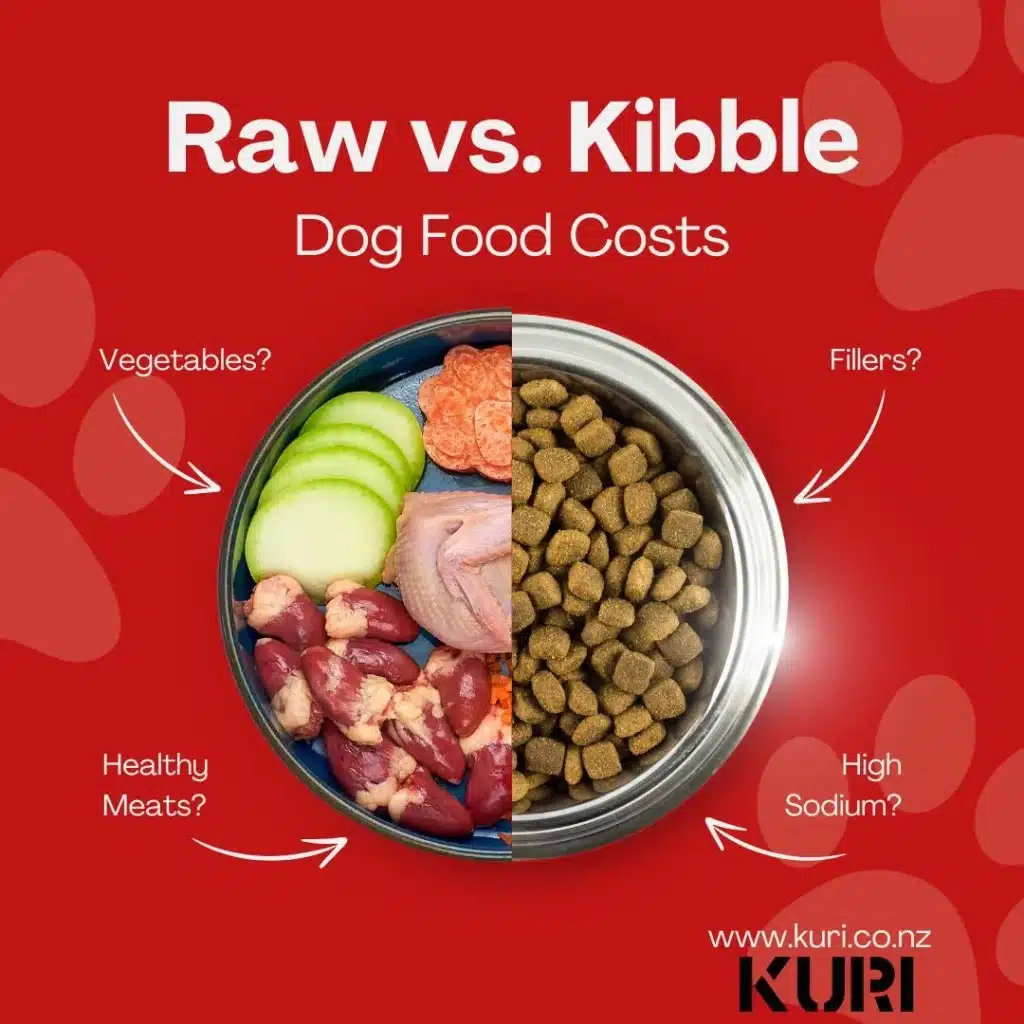
What is kibble, and what are you really comparing?
Kibble is dry dog food formed into pellets, usually sold in bags and fed by cup or gram weight. This guide compares what kibble costs each month against raw dog food in NZ, using dog size, bag price, price per kilogram and feeding amount so you can judge the real cost.
The trap with kibble is that the bag price is easy to see, but the monthly cost is not. A cheap supermarket bag, a premium imported dry food and a NZ-made kibble can all sit under the same word, even though the ingredients, feeding amounts and price per kilogram are very different.
So this is not a fake comparison between the cheapest kibble and the most expensive raw food. The useful comparison is: what does your dog eat each day, what does that food cost per kilogram, and what do you actually spend each month?
How much does kibble cost per month in NZ?
Kibble cost depends on your dog's size, the bag price and the daily feeding guide. As a quick check, divide the bag price by the kilograms in the bag, then multiply that price per kilogram by how much your dog eats each day across a 30-day month.
Use this worked table as a quick way to sanity-check your current kibble bill. It uses two common premium-kibble price points: $15/kg and $35/kg. Your dog may eat more or less than these examples, so always check the feeding guide on your actual bag.
| Dog size | Example daily kibble | At $15/kg | At $35/kg | What to compare with raw |
|---|
| Small dog | 100g/day | About $45/month | About $105/month | Use your dog's weight in the Kuri calculator, then compare monthly totals. |
| Medium dog | 250g/day | About $113/month | About $263/month | Premium kibble and balanced raw can be closer than the bag price suggests. |
| Large dog | 450g/day | About $203/month | About $473/month | Daily grams matter more than the headline price on the bag. |
For current shelf checks, compare dry dog food ranges at Animates, Petstock and NZ-made kibble options like Kooky Kibble. Prices change, so use those pages as live references, then run the monthly maths above.
How do you calculate kibble cost per kilogram?
To calculate kibble cost per kilogram, divide the bag price by the bag weight. A $180 bag that weighs 12kg costs $15/kg. If your dog eats 250g a day, that is 7.5kg per month, or about $112.50 a month at that price.
This is where premium kibble can stop looking cheap. A smaller bag may feel easier to buy, but often costs more per kilogram. A larger bag may reduce the per-kilo cost, but dry food still needs to be stored properly so it does not go stale after opening.
The other thing to check is the feeding guide. Some dry foods recommend higher daily gram amounts than others. If one kibble costs less per kilogram but your dog needs much more of it, the monthly saving may shrink quickly.
What is the cost of raw dog food?
Raw dog food cost depends on your dog's weight, activity level, protein choice and portion size. Kuri makes that easier with frozen medallions and a portion calculator, so you can compare your current kibble spend with a measured raw feeding routine instead of guessing.
Commercial raw food, like Kuri Raw, is prepped, portioned and designed for practical home feeding. You are paying for real meat, organ and bone blends rather than dry pellets made to sit on a shelf for months.
Raw feeding can require freezer space and a little routine. In return, many owners like knowing exactly what is going into the bowl and being able to rotate proteins instead of being locked into one bag for weeks.
★★★★★ Customer review
“I can't recommend KURI enough. The raw is fantastic, and works out to be value for money and not as expensive as I first thought – see their food calculator, they've done all the work for you. The medallions make it easy: organ meat, bones and tripe in one easy medallion.”
Pip E, Kuri customer
Is raw dog food actually better than kibble?
Raw is not automatically better for every dog, and kibble is not automatically bad. The stronger question is whether you want a fresh, less processed feeding routine with clear portions, protein rotation and fewer filler ingredients than many dry dog foods provide.
Some kibble is well formulated. Some is mostly cheap calories, fillers and synthetic nutrients added after high-heat processing. The label matters, and so does how your dog responds to the food.
Kuri's perspective is simple: dogs deserve food that is recognisable, practical and matched to their body condition. That does not mean scaring people off kibble. It means helping owners compare the real monthly cost and the real bowl, not just the marketing on the bag.
How does kibble compare to raw dog food nutritionally?
Kibble is processed, shelf-stable dry food. Raw dog food is fresh or frozen food built around meat, organs and bone. Both need balance, but they feel very different in the bowl: kibble prioritises convenience and shelf life, while raw prioritises fresh ingredients and moisture.
The issue with poor-quality kibble is not only what is included. It is also what is missing: moisture, texture, variety and the ability to adjust proteins easily. That is why some dogs get bored with dry food and why owners start adding toppers, broth or fresh extras.
A good raw routine still needs structure. DIY raw can go wrong if it is just random meat. Kuri Raw is built to remove that guesswork with ready-portioned blends and practical feeding support.
What happens when you switch from kibble to raw?
When dogs switch from kibble to raw, the first changes owners usually notice are appetite, stool quality, coat condition and mealtime interest. The transition should still be gradual, especially for dogs that have eaten dry food for years.
Some dogs adjust quickly. Others need more time. A temporary change in stool can happen while the gut adapts, so the sensible approach is to watch your dog, hold steady if needed and avoid changing too many things at once.
If your dog has a medical condition or a complicated diet history, talk to your vet before making a major diet change. Raw feeding should be practical and well planned, not rushed.
Is raw dog food worth it?
Raw dog food is worth considering when the monthly cost is close to your current premium kibble spend and you value fresher ingredients, clearer portions and protein rotation. It may not beat budget kibble on price, but budget kibble is not the only comparison that matters.
Raw often looks dearer when you only compare the price per kilogram. That is not the full picture. Compare the daily feeding amount, the quality of the ingredients and whether your dog actually does well on the food.
Be careful with big promises. No food guarantees lower vet bills or fixes health problems. What Kuri can offer is a clear, convenient way to feed real food and compare the cost properly before you switch.
How does the cost to feed raw compare to kibble?
Premium kibble and balanced raw can sit closer together than many owners expect. The most useful comparison is your monthly spend, not the shelf price. Measure what your dog eats now, price it by the month, then compare that with a Kuri raw portion estimate.
If you want to save money, you can also adjust how you feed. Some owners use raw as the full diet. Others use it as part of the routine while they transition away from kibble. What matters is that the portions stay sensible and the diet stays balanced.
Why do dog food brands make price comparisons confusing?
Dog food brands make comparison hard because bag size, feeding guide, ingredient quality and marketing claims all move at once. A cheap bag can become less cheap if your dog eats a lot of it, while an expensive bag can last longer than expected.
Ignore the front of the bag for a minute. Check the first ingredients, the protein source, the bag weight, the daily grams and the price per kilogram. Then compare it with your raw feeding estimate.
Try the Kuri raw food cost calculator
The fastest way to compare kibble and raw is to calculate your current monthly dry-food spend, then run your dog's weight through Kuri's raw food calculator. That gives you a practical side-by-side number instead of a vague feeling that one option is cheaper.
Use the Kuri food cost calculator to compare what you are spending now with what you would spend feeding Kuri Raw. Then check the current Kuri raw food range for proteins, medallions and current prices.
How do you transition your dog from kibble to raw?
Most dogs do best when the move from kibble to raw is gradual. Start with a small raw portion, keep the rest of the meal familiar, then increase raw over several days while watching stool quality, appetite and comfort.
What steps should you follow to switch from kibble to raw?
Start slowly. For the first few days, feed mostly the food your dog already knows with a small raw portion added. If everything looks steady, move towards 50/50, then 75/25, then a full raw meal routine.
Watch your dog's poos. If they are loose, pause and hold the current ratio for longer. Do not panic and do not keep changing proteins every day.
We often suggest starting with a simple, palatable protein and asking the Kuri team if you are not sure where to begin.
How long does it take for dogs to adjust to new food?
Some dogs adjust in a few days. Others take a few weeks. Dogs that have been on kibble for years may need a slower transition than puppies or younger dogs.
Watch behaviour, appetite and digestion. If your dog has a medical history or you are unsure, check in with your vet before changing the whole diet.
What signs indicate your dog is adjusting well?
You will know the transition is going well when:
Meals disappear without coaxing.
Energy is steady.
Stools are small, firm and predictable.
Your dog seems satisfied after eating.
The routine feels easy enough to keep doing.
That last point matters. The best food plan is one your dog does well on and you can actually maintain.
Why choose Kuri Raw if you are comparing kibble?
Kuri Raw is built for owners who want real food without turning dinner into a science project. You get frozen, portion-friendly medallions, practical protein options and a Christchurch team that can help you compare cost, portions and transition steps.
No fillers. No vague pellets. Just raw food made with real meat, bones and organs, prepared for convenience and backed by people who feed it to their own dogs.
We portion our meals into easy medallions, so you take what you need, defrost it and feed. That keeps the routine simple and helps reduce waste.
We offer a mix of proteins so your dog can have variety. Lamb, chicken, tripe, beef and other options give you room to rotate without rebuilding the whole diet from scratch.
Kuri is for people who want to feed their dogs real food without stress and without guessing. Use the calculator first, then make the decision with proper numbers in front of you.
Kibble Cost FAQs
What is kibble dog food?
Kibble is dry dog food made into small pellets. It is usually cooked at high temperatures, packaged in bags and fed by cup or gram weight.
Quality varies widely. Some kibble is budget dry food built around cheap calories, while premium kibble may use better ingredients and cost much more per kilogram.
How much does kibble cost per month in NZ?
Kibble can cost anywhere from under $50/month for a small dog on lower-cost dry food to several hundred dollars a month for a larger dog on premium kibble.
The only reliable way to know is to calculate your actual bag price, bag weight and daily feeding amount.
Is kibble or raw food cheaper for dogs in NZ?
Budget kibble is usually cheaper than raw. Premium kibble can be much closer to raw once you compare monthly feeding cost instead of bag price.
If your dog eats premium dry food, use the calculator and compare your real monthly cost with a Kuri raw estimate.
Why does kibble seem cheaper than raw dog food?
Kibble often seems cheaper because owners compare the bag price with the raw food order price. That misses the daily feeding amount, price per kilogram and how long each option actually lasts.
For a fair comparison, calculate both foods over 30 days using your dog's actual portion.
Trying to improve a bowl your dog already eats? Here are practical ways to make dog food more appealing without overloading it.
Choose the right KURI raw food
Use our raw-feeding guide and portion calculator to compare proteins and estimate a sensible starting amount for your dog.
Shop KURI raw dog food for convenient frozen medallions. We aim for same-day Christchurch delivery when you order before 9am. Overnight South Island delivery excludes rural delivery addresses.
 01Sep
01Sep